
Cookline and Equipment Exteriors
Degreasing focuses on accessible fronts, sides, control surrounds, kick plates, and nearby surfaces without opening service panels or disturbing utility connections.
Serving San Jose, California & surrounding areas
Open 24/7
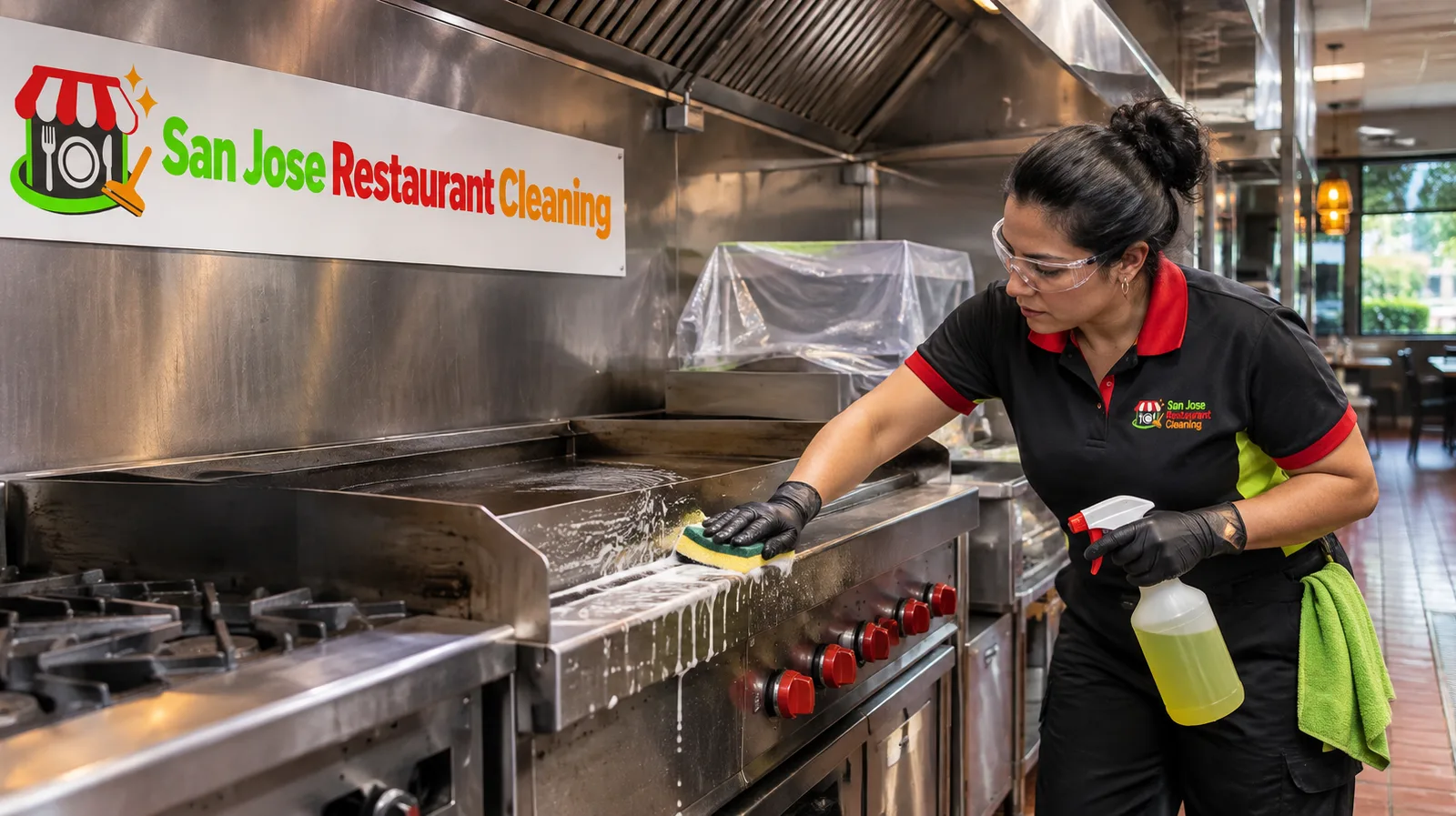
Remove hardened grease, food residue, and floor buildup with a detailed cleaning plan shaped around your equipment, operating hours, and problem areas.
Restaurant Kitchen Deep Cleaning Cupertino work addresses the residue that routine closing duties often cannot remove. Grease settles behind cooklines, under movable equipment, around casters, along wall-floor junctions, and in grout or textured flooring. These deposits can hold soil, create odors, and make floors slippery when they mix with water or fresh cooking oil.
San Jose Restaurant Cleaning builds each scope around the kitchen's layout and current condition. Our crew identifies access limits, sensitive equipment, food-contact surfaces, and the areas that need concentrated degreasing before work starts. For Cupertino projects, San Jose's local restaurant service coordinates the work around the practical demands of an operating kitchen, including narrow work windows and the need to return cleaned areas in an orderly condition.
Deep cleaning supports sanitation efforts, but it does not replace a restaurant's food-safety program, pest-control plan, equipment servicing, or required hood and exhaust-system work. A useful scope states exactly which floors, walls, equipment exteriors, and accessible spaces are included.
A kitchen deep clean starts with the areas that collect the heaviest soil. Common targets include equipment exteriors, backsplash surfaces, stainless steel prep tables, shelving, baseboards, kick plates, floor drains, and accessible spaces beneath or behind movable units. Appropriate degreasers are given enough dwell time to loosen greasy residue before agitation and removal.
Detail work may include scrubbing around equipment legs and casters, cleaning wall-floor junctions, removing buildup from washable wall surfaces, and treating stubborn traffic lanes. Food-contact surfaces require products and final treatment appropriate to their intended use. Cleaning and sanitizing are separate steps: cleaning removes soil, while sanitizing is performed afterward with a suitable product and according to its label directions.
Cooking appliances are handled within an agreed scope. Exterior cleaning does not mean dismantling gas, electrical, refrigeration, or fire-suppression components. Fixed equipment is not moved unless access, weight, connections, and site authorization make that safe.
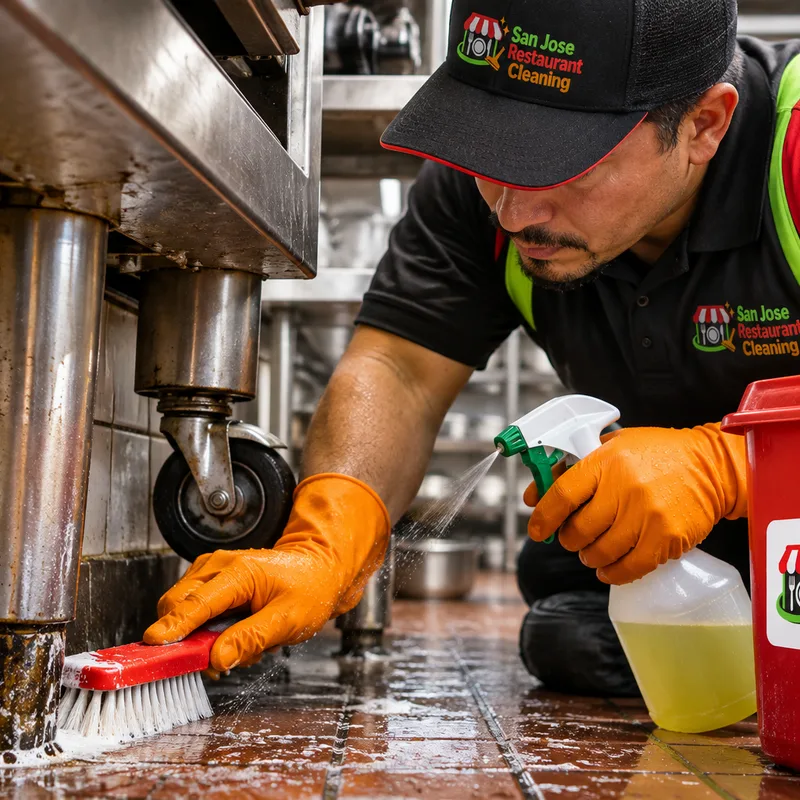
Degreasing focuses on accessible fronts, sides, control surrounds, kick plates, and nearby surfaces without opening service panels or disturbing utility connections.
Work can cover stainless steel tables, washable walls, shelving, splash zones, and sink exteriors. Food, utensils, and loose supplies must be removed or protected before cleaning.
Corners, baseboards, grout lines, floor-wall junctions, casters, and spaces beneath movable equipment receive focused agitation rather than a quick surface pass.
When included in the written scope, cleaning can address restaurant flooring outside the kitchen where tracked grease and food soil affect appearance and traction.
The work sequence accounts for opening and closing duties, equipment cooldown, staff movement, and the drying time required before normal traffic resumes.
Chemical choice, dwell time, brush stiffness, and extraction method are adjusted for the soil and surface rather than applied as one treatment throughout.
Restaurant Floor Cleaning Cupertino projects require more than spreading degreaser and rinsing it away. Kitchen floors often combine oily soil with proteins, starches, detergent film, and grit. Effective cleaning begins with dry soil removal, followed by chemical application at the correct dilution, dwell time, mechanical agitation, and controlled recovery of the dirty solution.
The floor material determines the method. Quarry tile and textured commercial tile may need firm brushing around grout lines and low points. Sealed concrete and resilient flooring require products compatible with their finish. Excessive chemical strength can leave residue or damage some surfaces, while uncontrolled water can enter equipment bases, adjacent dining areas, or other places that should remain dry.
Floor drains and drain surrounds can be included when they are accessible and part of the agreed work. Cleaning a drain surface does not correct plumbing blockages or damaged drain components. After soil removal, the floor needs a suitable rinse or recovery step and enough drying time before employees return to the area.
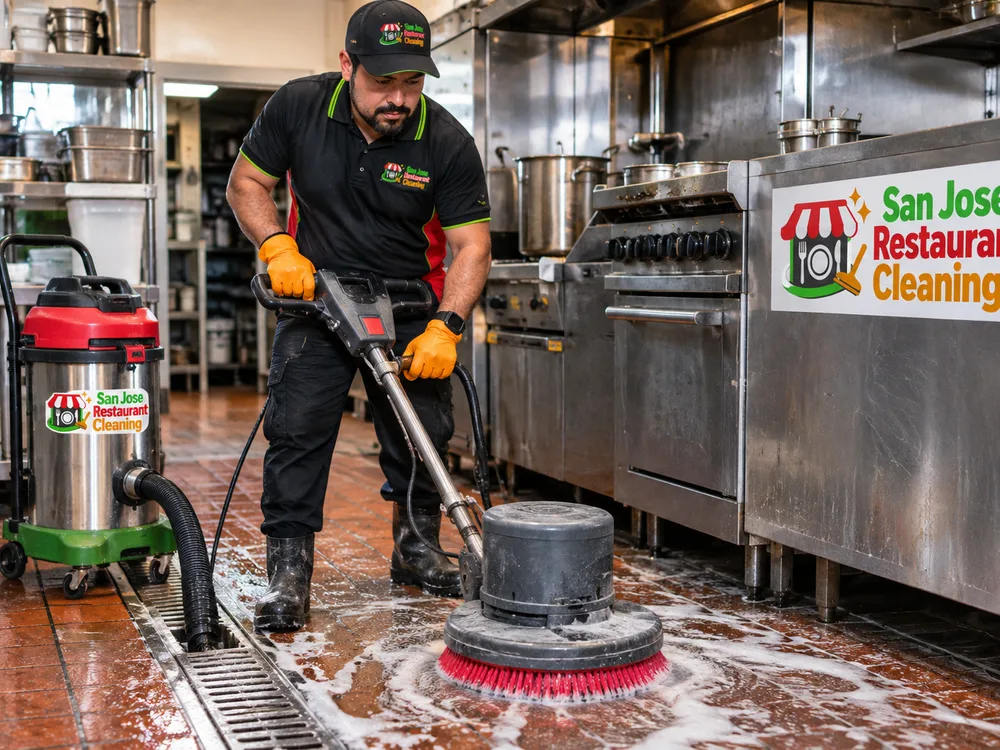
The kitchen layout, floor type, soil level, operating schedule, water access, and equipment restrictions are reviewed. Included and excluded areas are recorded before cleaning begins.
Food, utensils, paper goods, and loose supplies are removed or protected. Equipment is allowed to cool, and staff identify units that must remain connected or stationary.
Dry debris is collected before wet cleaning. This keeps crumbs, grit, and loose deposits from turning into slurry during degreasing.
Compatible products are applied at label dilution and allowed appropriate dwell time. Brushes, pads, and detail tools loosen buildup around edges, grout, supports, and accessible equipment surfaces.
The crew removes dirty solution, completes applicable rinsing or sanitizing steps, and checks the included areas. The kitchen is left to dry before regular traffic and food preparation resume.
Cupertino restaurants near Main Street Cupertino and the Vallco area can have active evening traffic, which often makes an after-close work window more practical. Restaurants serving office activity around Stevens Creek Boulevard may prefer cleaning after the final service or during a planned closure. The schedule should leave enough time for equipment to cool, floors to dry, and opening staff to reset the kitchen safely.
Site access matters as much as cleaning time. Before arrival, the restaurant should confirm parking or loading instructions, alarm procedures, key access, and who can authorize equipment movement. Staff should also remove exposed ingredients, clean utensils, and single-use items from the work zone. Refrigeration units, gas appliances, and heavy cookline equipment remain in place unless safe movement has been approved in advance.
California restaurants operate under food-safety requirements enforced through local authorities, but every facility has its own operating procedures and inspection history. Deep cleaning should support those procedures without being presented as a guarantee of inspection results or correction of equipment, plumbing, ventilation, or pest issues.
Restaurant kitchen deep cleaning in Cupertino typically ranges from $800 to $3,500, while large kitchens, severe grease buildup, or multi-area projects may cost more. A smaller floor-focused visit may fall near the lower end; a full cookline, wall, equipment-exterior, and floor scope costs more.
Final pricing depends on kitchen size, soil level, floor material, equipment access, movable contents, water access, parking, and the available work window. Specialized exhaust, fire-suppression, plumbing, or equipment service is separate. The exact cost is confirmed after a site review and written scope.
A written scope lets you compare the included surfaces, access requirements, work window, and exclusions before scheduling the deep clean.
Call for a Free QuoteReview timing, access, equipment movement, floor conditions, sanitizing, exhaust scope, and preparation before requesting a quote.
A focused floor and detail clean may fit within one closed-service window, while a large kitchen or heavy buildup can require a longer visit or staged work. The estimate depends on square footage, soil level, equipment access, and whether walls, prep areas, drains, or dining floors are included. Cupertino restaurants with tight overnight access should reserve time for setup, cleaning, recovery, drying, and the opening crew's reset.
Yes, after-hours scheduling is often possible when access and the work window are confirmed in advance. Equipment must have enough time to cool, and exposed food, clean utensils, and disposable supplies must be removed or protected. The restaurant should also provide closing procedures, alarm instructions, and a responsible contact for access questions.
Equipment is moved only when its weight, connections, condition, and available clearance allow safe movement with site approval. Gas lines, electrical connections, refrigeration lines, fire-suppression components, and fixed installations are not disconnected as part of routine deep cleaning. Accessible areas around stationary equipment can still be treated within the agreed scope.
No, cleaning removes surface soil and grease but cannot guarantee removal of permanent discoloration, worn finishes, damaged grout, chemical burns, or stains absorbed into porous material. Quarry tile, sealed concrete, and resilient flooring respond differently to degreasers and agitation. A site review helps distinguish removable buildup from damage that may require repair or refinishing.
Food-contact surfaces can be cleaned and sanitized when they are included in the written scope and the correct product and procedure are available for the surface. Cleaning must remove visible soil before sanitizing, and label directions govern concentration, contact time, rinsing, and permitted use. Restaurant staff remain responsible for their food-safety procedures before production resumes.
Hood and exhaust-system cleaning is included only if it is explicitly identified in the written scope. Exterior hood surfaces are different from internal ducts, fans, filters, and fire-suppression components, which may require specialized service and documentation. Confirm those boundaries before scheduling so the kitchen receives the work it actually needs.
Remove loose items, mats, food containers, and mobile racks from the agreed floor area before the crew arrives. Identify damaged tiles, loose grout, leaking equipment, and drains that do not flow properly. Plan a traffic-free drying period after cleaning, especially when overnight work must be completed before an early opening.
Tell San Jose Restaurant Cleaning about your Cupertino kitchen, floor material, buildup, operating hours, and access limits. We will help define a practical scope and work window before cleaning begins.