
Ceilings, Beams, and Ledges
Accessible ceiling surfaces, exposed framing, wall caps, and horizontal ledges are cleaned with methods suited to dry dust or bonded residue.
Serving San Jose, California & surrounding areas
Open 24/7
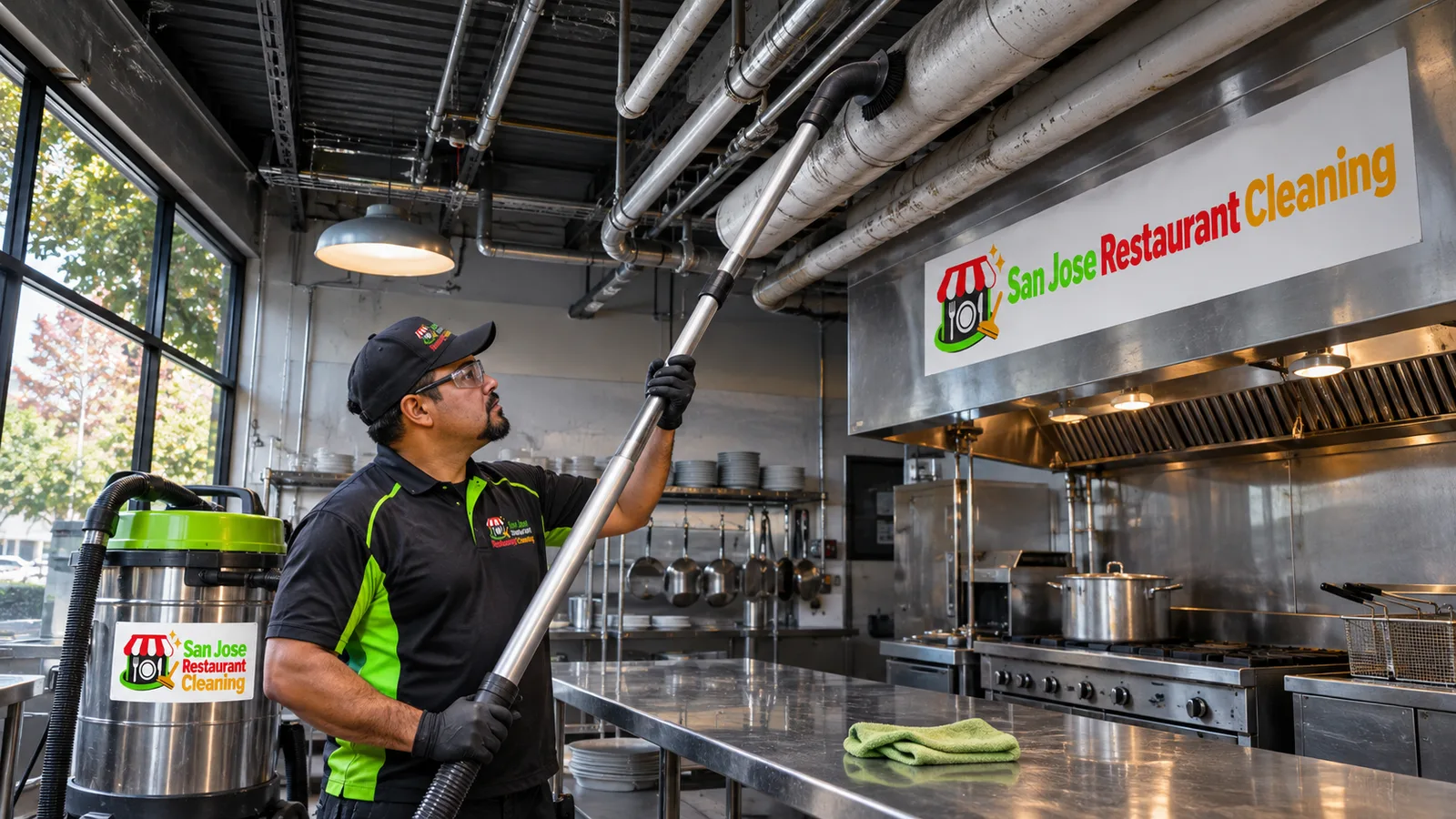
Remove overhead grease, dust, and loose debris with a cleaning plan built around your kitchen layout, operating hours, and access needs.
Restaurant High Dusting Campbell addresses residue that routine floor and counter cleaning cannot reach. Dust and grease can collect on exposed pipes, conduit, ceiling vents, light housings, beams, ledges, and the tops of tall equipment. Air movement, vibration, or maintenance work may loosen that material over food preparation and storage areas.
San Jose Restaurant Cleaning approaches the work as a professional restaurant company in San Jose, CA serving Campbell businesses from our San Jose base. We review the room, identify sensitive surfaces, and plan access before cleaning starts. The scope can cover a single kitchen, storage area, prep room, or the accessible overhead surfaces throughout a restaurant.
Campbell's downtown dining district has restaurants in closely spaced commercial buildings where access, customer traffic, and operating hours can shape the schedule. Restaurants near Hamilton Avenue may have larger parking areas and easier equipment staging, while locations around Winchester Boulevard often require coordination with neighboring businesses. These practical differences are considered when the work plan is prepared.
The work begins with a visual survey of accessible overhead surfaces. Common targets include open rafters, ceiling grids, pipes, sprinkler piping exteriors, duct exteriors, cable trays, diffusers, return grilles, wall ledges, signage tops, and light housings. Equipment interiors, energized electrical components, fire-suppression nozzles, and inaccessible concealed spaces require separate procedures or qualified specialists.
Technicians may use HEPA-filtered vacuums, extension poles, microfiber tools, and controlled damp wiping. Vacuuming is often preferred for loose dry soil because it captures debris at the surface rather than sending it into the room. Greasy film may require a compatible degreaser and hand wiping after food, utensils, and equipment have been protected. Product choice depends on the surface, residue, and manufacturer guidance.
High dusting supports broader Restaurant Kitchen Cleaning Campbell plans, but it has a distinct purpose. It targets elevated horizontal and vertical surfaces that are easily missed during routine closing duties. Exhaust hood interiors, ducts, and rooftop fans are specialized systems and should not be treated as ordinary high-dusting surfaces.
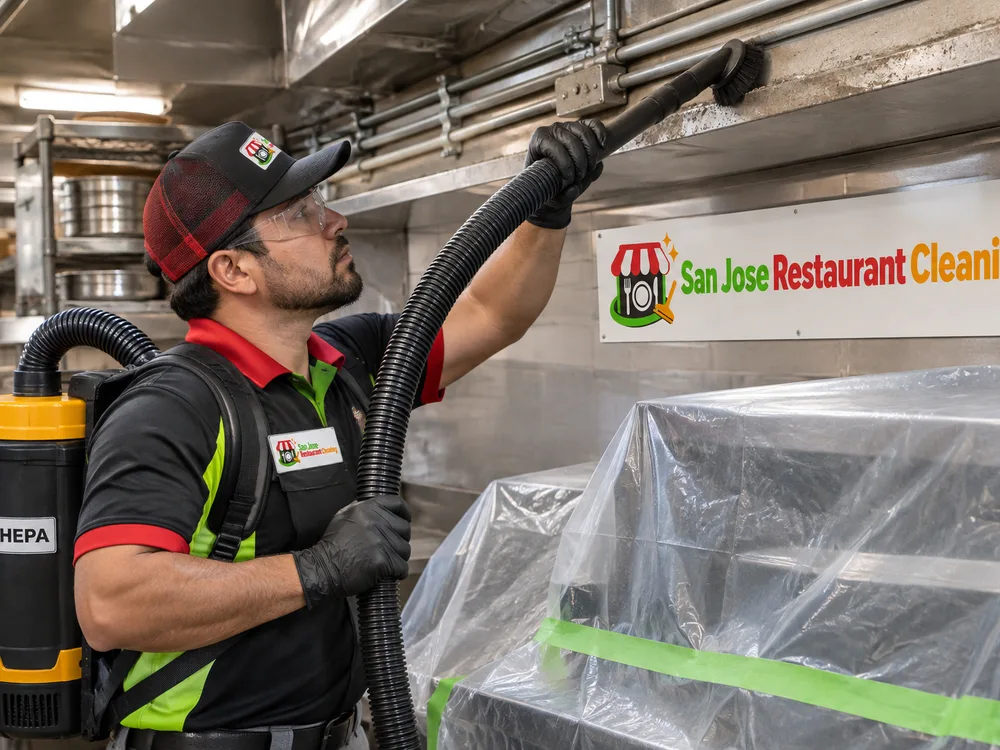
Accessible ceiling surfaces, exposed framing, wall caps, and horizontal ledges are cleaned with methods suited to dry dust or bonded residue.
The accessible exterior surfaces of non-sensitive pipes, conduit, and cable supports can be vacuumed or wiped without opening or servicing the systems.
Accessible diffuser faces, return grilles, and exterior light housings are cleaned after power, heat, fragility, and fall risks are assessed.
Dust and greasy residue are removed from reachable tops of refrigerators, shelving, cabinets, and other fixed kitchen equipment.
The scope may extend to overhead surfaces in dry storage, corridors, service counters, and dining rooms when those areas are included during the walkthrough.
Food-contact surfaces, open ingredients, utensils, and vulnerable equipment are removed or covered before overhead debris is disturbed.
We identify the surfaces to be cleaned, ceiling heights, grease conditions, fragile fixtures, and areas that require special access. The walkthrough also separates high dusting from exhaust-system work, electrical service, and other tasks outside the agreed scope.
Cleaning is commonly planned outside food preparation and customer service hours. The schedule accounts for cooling equipment, clearing open food, moving portable items, and allowing cleaned surfaces to dry before normal operations resume.
Food and clean utensils are removed or sealed. Counters, appliances, and preparation surfaces are covered as needed. Ladders or access equipment are positioned on stable flooring without blocking required exits.
Technicians work methodically from upper surfaces toward lower ones. HEPA vacuuming captures loose dust, while compatible cleaners and microfiber tools address greasy film where wet cleaning is appropriate.
Covers and captured debris are removed, reachable surfaces are checked, and affected preparation areas receive final attention. Any inaccessible surface or maintenance concern observed during the work is reported rather than disturbed.
Commercial kitchens produce airborne moisture and grease aerosols. When those particles settle, they can bind ordinary dust to pipes, fixtures, and ledges. A dry duster may smear that film or release particles into the room. Effective cleaning separates loose soil removal from wet wiping and uses a chemical compatible with the finish.
Campbell restaurants also need to account for the South Bay's long dry season. Open doors, deliveries, and rooftop air intakes can contribute outdoor dust, while cooking residue makes it adhere to overhead surfaces. The consequence is practical: restaurants with exposed ceilings or heavy production may need overhead conditions reviewed more often than enclosed, lower-volume spaces.
High dusting does not replace hood and duct cleaning, pest management, or daily sanitation. It fills the gap between routine cleaning and specialized system maintenance. A written scope should state which rooms and surfaces are included, what will be covered, what access equipment is expected, and which items are excluded.
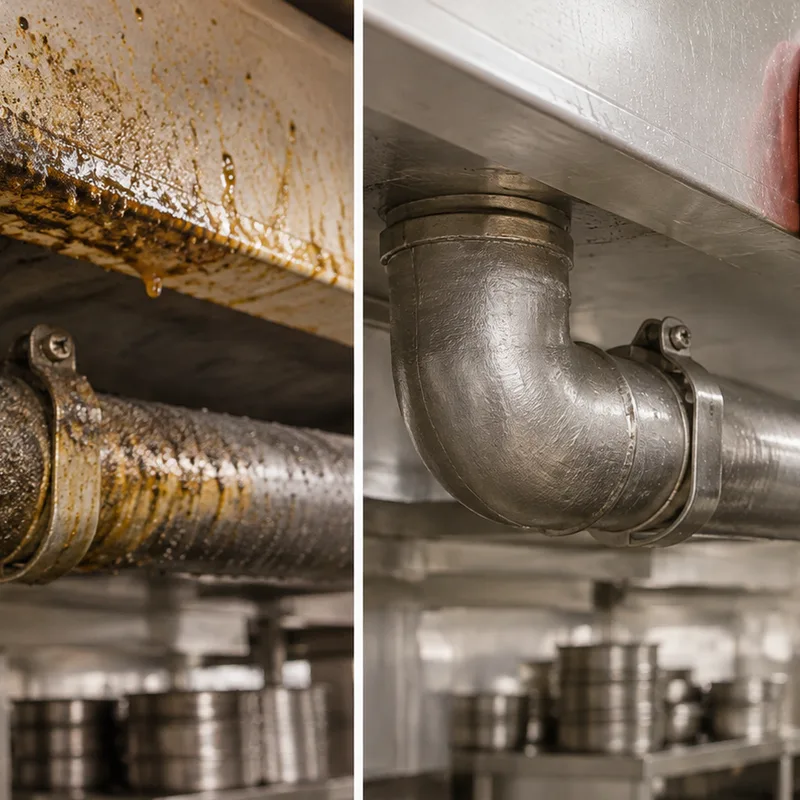
The right frequency depends on cooking volume, ceiling design, ventilation, nearby outdoor dust sources, and how quickly residue returns. An open ceiling with many pipes creates more horizontal collection points than a smooth finished ceiling. Frying and high-heat cooking may also create more adhesive residue than a low-grease preparation area. There is no useful one-size schedule.
A practical plan starts with an inspection and a baseline cleaning. Afterward, the manager can monitor representative areas such as refrigerator tops, beams near the cook line, return grilles, and ledges over storage. When visible buildup returns, the interval can be adjusted based on actual conditions rather than a generic calendar.
Access is another major factor. Standard extension tools may reach some surfaces, while tall or obstructed areas can require ladders or other suitable access equipment. Work around sprinkler components, wiring, hot fixtures, and moving equipment must be controlled. Cleaners should never hang tools from pipes or use restaurant equipment as a climbing platform.
Before the appointment, close or remove open food, identify alarms or sensitive equipment, and confirm who can authorize access. Let the cleaning team know about loose ceiling materials, known leaks, damaged insulation, or surfaces that cannot tolerate moisture. These details help define a safer and more accurate scope.
Arrange a walkthrough to identify overhead buildup, access constraints, and the best work window for your Campbell restaurant.
Call for a Free QuoteReview pricing, work windows, access, protection, exhaust-system limits, and cleaning frequency before requesting a quote.
Pricing is based on the area cleaned, ceiling height, residue level, access, and required protection rather than a flat rate. A small room with reachable dry dust takes less labor than an open-ceiling kitchen with bonded grease, dense piping, or limited ladder placement. A walkthrough allows San Jose Restaurant Cleaning to confirm the exact scope and price before work begins.
High dusting is usually scheduled when food preparation and customer service have stopped. Overhead work can release debris, requires protective coverings, and may temporarily restrict access around ladders or equipment. Campbell restaurants with late service or early prep can discuss a work window that allows protection, cleaning, inspection, and drying before operations resume.
The duration depends on room size, ceiling complexity, soil condition, and access. One accessible area with light dry dust may be completed in a single work period, while multiple rooms or greasy exposed ceilings can require a longer visit or phased work. The expected duration is set after the restaurant walkthrough.
Standard high dusting does not include cleaning inside exhaust hoods, ducts, or rooftop fans. Those components are part of a specialized grease-exhaust system and require their own procedures. High dusting may include accessible exterior surfaces near the system if they are safe to clean and specifically listed in the scope.
Food, clean utensils, and food-contact surfaces must be removed, sealed, or protected before overhead cleaning begins. The amount of preparation depends on the layout and the cleaning method. During a Campbell restaurant walkthrough, the team can identify what staff should clear and what protective setup is included.
Many greasy deposits can be reduced with surface-compatible degreasers and controlled wiping, but suitability depends on the material and condition. Unfinished insulation, damaged coatings, porous ceiling materials, energized components, and fire-suppression hardware may limit wet cleaning. A test area may be used before broader treatment.
The interval should be based on observed buildup, cooking activity, ventilation, and the number of exposed overhead surfaces. Restaurants with open rafters, frequent deliveries through open doors, or grease-producing cook lines may see residue return sooner. A baseline cleaning followed by periodic visual checks provides a defensible schedule for the specific kitchen.
Tell San Jose Restaurant Cleaning about your kitchen layout, ceiling height, and preferred work window. We will define the surfaces, protection measures, and access needs before scheduling the job.