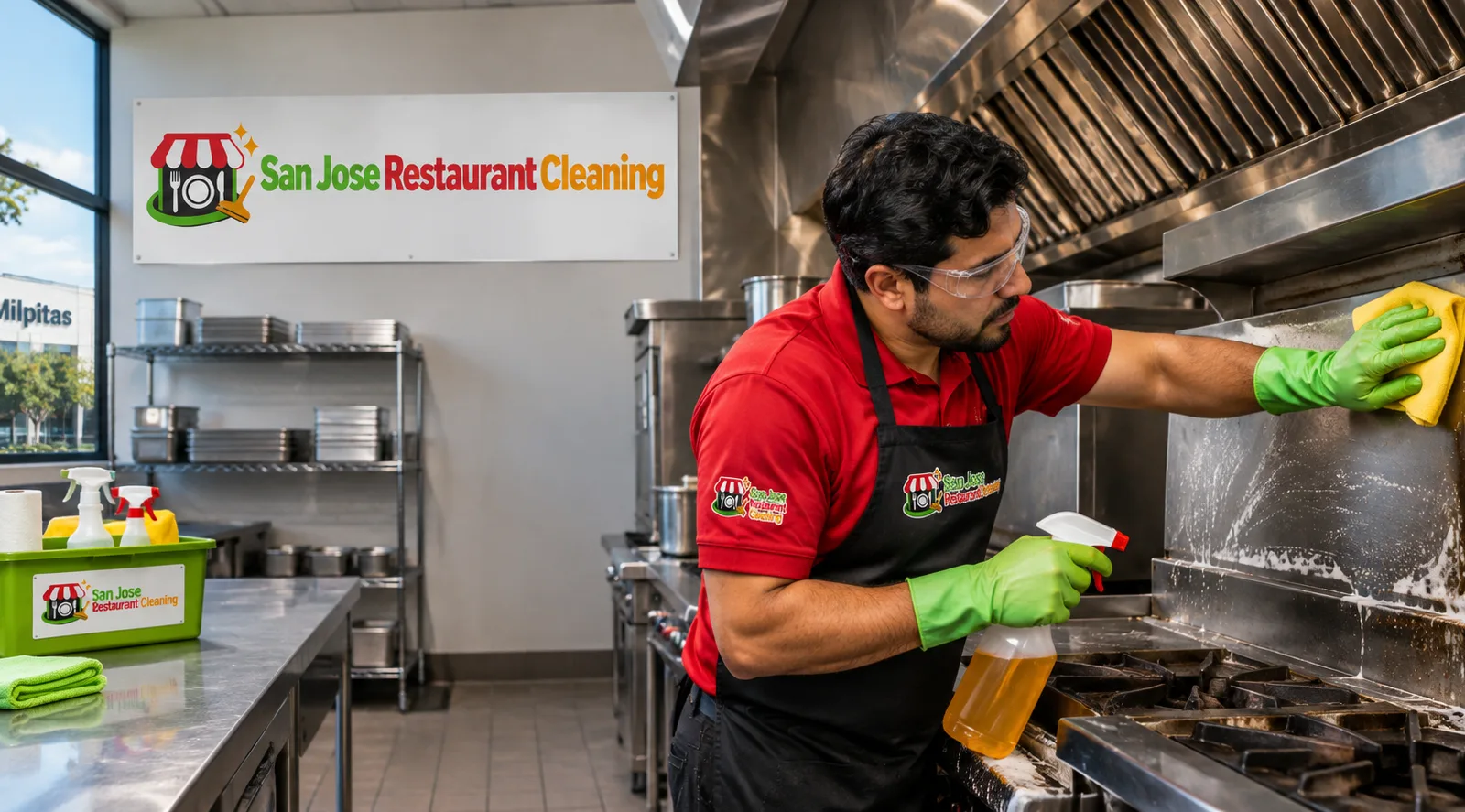
A professional cleaner degreasing stainless steel cooking equipment in an organized Milpitas commercial kitchen
Restaurant Cleaning · Milpitas

Restaurant Cleaning Milpitas

Detailed kitchen, equipment, dining room, and back-of-house cleaning built around your operating hours and the demands of a working restaurant.

✓Kitchen and equipment care
✓Routine or deep cleaning
✓Written cleaning scope
✓Planned around service hours
Site-Specific Cleaning

Restaurant Cleaning Milpitas Businesses Can Schedule Around Service

Restaurant Cleaning Milpitas requires more than a quick pass over visible surfaces. Grease travels through cooking areas, crumbs collect beneath equipment, and frequent handling leaves residue on doors, counters, and fixtures. San Jose Restaurant Cleaning builds the scope around the way your restaurant operates, with attention to food preparation areas, dining spaces, restrooms, storage areas, and employee work zones.

Our San Jose base gives us practical access to Milpitas restaurants near Interstate 880 and State Route 237. These corridors support busy commuter and commercial activity, so cleaning often must fit into a narrow window after closing or before preparation begins. Restaurants near the Great Mall may face heavy customer traffic and frequent dining room turnover, while kitchens around McCarthy Ranch may need service planned around business lunches, evening trade, and deliveries.

We begin by discussing your hours, equipment layout, priority areas, and any surfaces that need special handling. Our team of San Jose’s restaurant specialists then prepares a written scope defining what will be cleaned, how often it will be addressed, and what access the crew needs.

Cleaning Coverage

What a Restaurant Cleaning Scope Can Cover

Commercial Kitchens

Degreasing and detail cleaning can cover accessible floors, walls, prep tables, shelving, sinks, exterior appliance surfaces, and the areas beneath movable equipment. Product selection must match each surface and the restaurant's food-safety procedures.

Restaurant Equipment Cleaning

Restaurant Equipment Cleaning Milpitas may include range and fryer exteriors, griddles, ovens, refrigeration exteriors, stainless steel worktables, casters, and accessible spaces around equipment. Each item is assessed for heat, grease buildup, electrical components, and manufacturer restrictions.

Dining Areas

Service may include floors, tables, chair frames, booths, partitions, ledges, entry glass, and other customer touchpoints. The cleaning plan accounts for the flooring type and the time available before the room returns to use.

Restrooms and Employee Areas

Restrooms, break areas, service stations, and staff touchpoints need consistent attention. Cleaning can address fixtures, mirrors, partitions, floors, dispensers, and other agreed surfaces.

Back-of-House Floors

Commercial kitchen floors often collect grease near cook lines and food residue along edges or beneath movable units. Degreasing, agitation, extraction, or wet recovery may be used when appropriate for the floor and drainage setup.

Periodic Detail Work

High dusting, wall washing, base detailing, storage-area cleaning, and equipment pullouts can be scheduled separately from routine service. These tasks are often rotated so the restaurant does not need one long shutdown.

Equipment Care

Careful Cleaning for Commercial Cooking Equipment

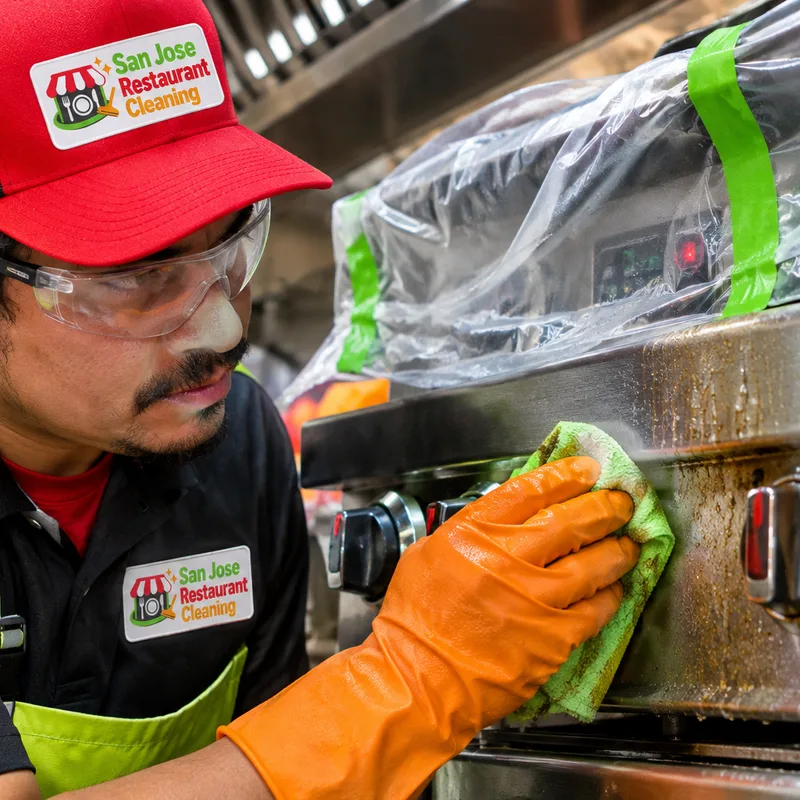
Equipment cleaning begins with identifying what can be safely accessed. The crew considers whether a unit is hot, connected to gas or power, fixed in place, or approved to move. Control panels, burner components, seals, pilot areas, electrical connections, and refrigeration coils require different methods. Water and degreaser should never be sprayed indiscriminately around sensitive components.

For stainless steel, the cleaner should be compatible with the finish and applied with the grain where practical. Heavy grease may need dwell time and controlled agitation rather than an abrasive tool that can scratch the surface. Painted panels, aluminum parts, rubber gaskets, stone, grout, and resilient flooring also need products suited to the material.

A standard equipment-cleaning scope generally covers accessible exterior surfaces unless internal cleaning is specifically included. Exhaust hoods, ducts, and fans may require separate specialist work and documentation. San Jose Restaurant Cleaning identifies such exclusions before work begins so restaurant managers can coordinate other vendors when needed.

Close view of a trained cleaner removing grease from a stainless steel range exterior with controls and electrical components protected
From Walkthrough to Review

How We Build and Carry Out the Cleaning Plan

01

Walk Through the Restaurant

We review the kitchen, dining room, restrooms, storage areas, floor materials, equipment placement, operating schedule, and access points. Managers can identify persistent grease zones, inspection concerns, and areas that receive the most customer contact.

02

Define the Scope and Frequency

The written scope separates routine cleaning from periodic deep work. It also records exclusions, preferred service windows, access instructions, and any equipment that staff must cool, empty, disconnect, or move before the crew arrives.

03

Prepare and Clean by Zone

The crew follows an order that limits cross-contamination between restrooms, dining areas, and food-service zones. Tools and products are selected for the soil and surface, while caution signs and controlled work areas help protect staff who may still be on the premises.

04

Review the Completed Work

Priority surfaces and agreed tasks are checked before the visit closes. If an inaccessible area, damaged surface, or maintenance concern affects the work, it is documented and brought to the manager's attention.

05

Adjust the Ongoing Schedule

Traffic, menu changes, seasonal demand, and new equipment can alter cleaning needs. The scope can be revised when buildup appears faster than expected or when a periodic detail task should be added.

Cleaning Frequencies

Routine Service and Deep Cleaning Have Different Jobs

Routine restaurant cleaning controls daily soil on floors, counters, dining furniture, restrooms, and accessible touchpoints. It is normally planned at a recurring frequency that matches operating hours and customer volume. Deep cleaning addresses accumulated residue in edges, corners, wall areas, equipment surrounds, casters, and other spaces that cannot receive full attention during daily closing duties.

A practical plan often combines both. Routine visits keep agreed areas under control, while rotating detail work targets one demanding zone at a time. A cook line might receive focused degreasing during one visit, followed by storage shelving or dining-room edges during another. This approach can reduce disruption for Milpitas restaurants with limited time between closing and morning food preparation.

Professional cleaning supports the restaurant's sanitation program, but it does not replace employee food-contact sanitation, pest control, equipment repair, fire-suppression service, or required hood and duct cleaning. Food-contact surfaces should be cleaned, rinsed, and sanitized according to the restaurant's approved procedures and product labels. Management remains responsible for its regulatory duties and required records.

Milpitas Service Planning

Local Scheduling for Milpitas Restaurants

Milpitas has restaurant activity spread across retail centers, office corridors, and established residential districts rather than one compact dining area. Near the Great Mall, customer traffic and late operating hours can make after-close cleaning the practical choice. Around McCarthy Ranch and Tasman Drive, weekday meal periods and nearby employment centers can shape access windows. Restaurants closer to Milpitas Boulevard may have compact back-of-house layouts where staging equipment and supplies requires extra planning.

The local road network also matters. Interstate 880 and State Route 237 can affect arrival times during commuter periods, so a workable schedule includes an agreed access window rather than an unrealistic minute-by-minute promise. The crew also needs instructions for gates, loading areas, alarms, keys, and the staff member responsible for opening or closing the property.

San Jose Restaurant Cleaning operates from 370 S 22nd St, Suite 4 in San Jose. Before recurring work starts, we confirm the Milpitas location, service window, parking or loading arrangements, and who can approve scope changes.

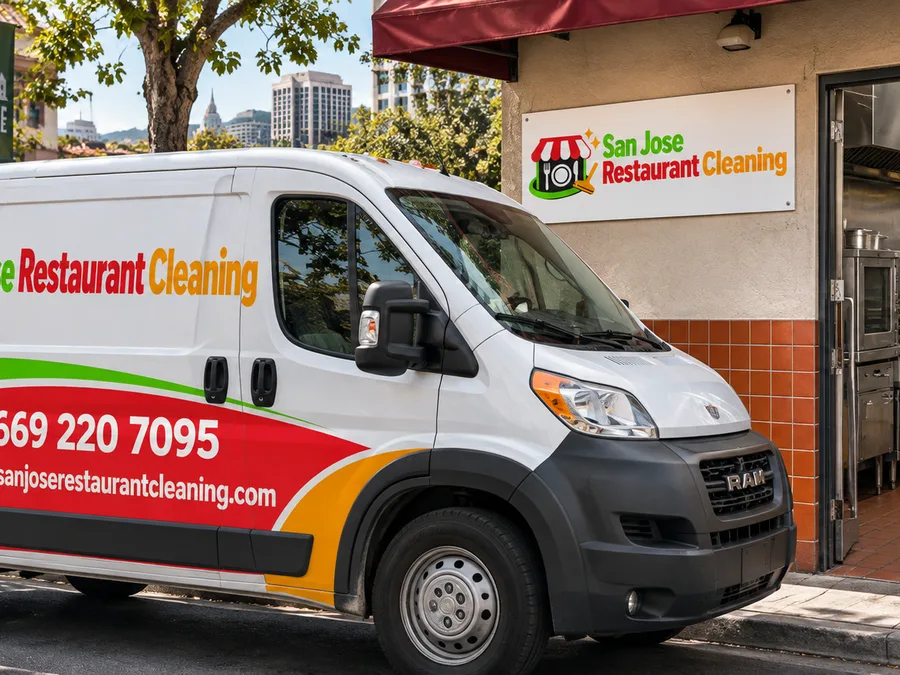
A commercial cleaning crew unloading labeled supplies outside a Milpitas restaurant during a planned off-hours service window

A walkthrough can turn recurring cleaning concerns into a clear scope, realistic service window, and schedule matched to your restaurant's operations.

Call for a Free Quote
Before You Schedule

Questions About Restaurant Cleaning in Milpitas

Review pricing factors, after-hours access, equipment preparation, cleaning frequency, inspection support, and deep-cleaning preparation.

How much does restaurant cleaning in Milpitas cost?+

Pricing depends on square footage, kitchen grease levels, equipment count, service frequency, floor type, access, and the length of the available work window. A dining-room maintenance visit has a different labor requirement than a first-time deep cleaning with equipment pullouts. After reviewing the Milpitas property and desired scope, San Jose Restaurant Cleaning can provide a written estimate tied to specific tasks.

Can cleaning be scheduled after the restaurant closes?+

Yes, after-hours cleaning can be planned when staffing and access allow. Many Milpitas restaurants have narrow windows between closing duties and morning preparation, so managers should provide alarm instructions, entry arrangements, equipment cooldown time, and a firm completion deadline before the first visit.

What is included in Restaurant Equipment Cleaning Milpitas?+

Equipment cleaning can include agreed exterior surfaces, sides, backs, legs, casters, and accessible floor areas around commercial units. Internal components, coils, gas connections, electrical assemblies, hood ducts, and fire-suppression systems are excluded unless specifically assessed and listed. The exact scope depends on manufacturer restrictions and whether equipment can be safely cooled, disconnected, or moved.

Do we need to move equipment before the crew arrives?+

Management should identify which units may be moved and arrange qualified help when disconnection is required. A cleaning crew should not move fixed, gas-connected, hardwired, or unusually heavy equipment without proper planning. For accessible mobile units, the walkthrough can establish who moves them and when.

How often should a restaurant schedule professional cleaning?+

Frequency should match cooking volume, grease production, customer traffic, flooring, and the work completed by closing staff. High-use floors and restrooms may need frequent service, while wall washing, high dusting, and detailed equipment surrounds can follow a rotating schedule. The plan should be reviewed if residue begins returning before the next Milpitas service visit.

Will professional cleaning help with a health inspection?+

Professional cleaning can help maintain the physical cleanliness of agreed areas, but it cannot guarantee an inspection outcome. The Santa Clara County Department of Environmental Health regulates retail food facilities in Milpitas, and restaurant operators remain responsible for food temperatures, employee practices, sanitizing procedures, pest control, equipment condition, records, and other requirements.

What should our staff do before a deep cleaning visit?+

Staff should remove or protect food, clear agreed prep surfaces, empty equipment scheduled for cleaning, allow hot units to cool, and secure knives or fragile items. The manager should also identify damaged surfaces, sensitive controls, restricted storage, and any area that must be ready first for the next shift.

Plan a Cleaner Restaurant Around Your Operating Hours

Tell San Jose Restaurant Cleaning about your Milpitas location, equipment, priority areas, and available service window. We will help define a practical scope before work begins.