
Cooking-Line Grease
Restaurant floor degreasing breaks up oily residue near fryers, ranges, prep equipment, and the traffic paths that carry grease away from the line.
Serving San Jose, California & surrounding areas
Open 24/7
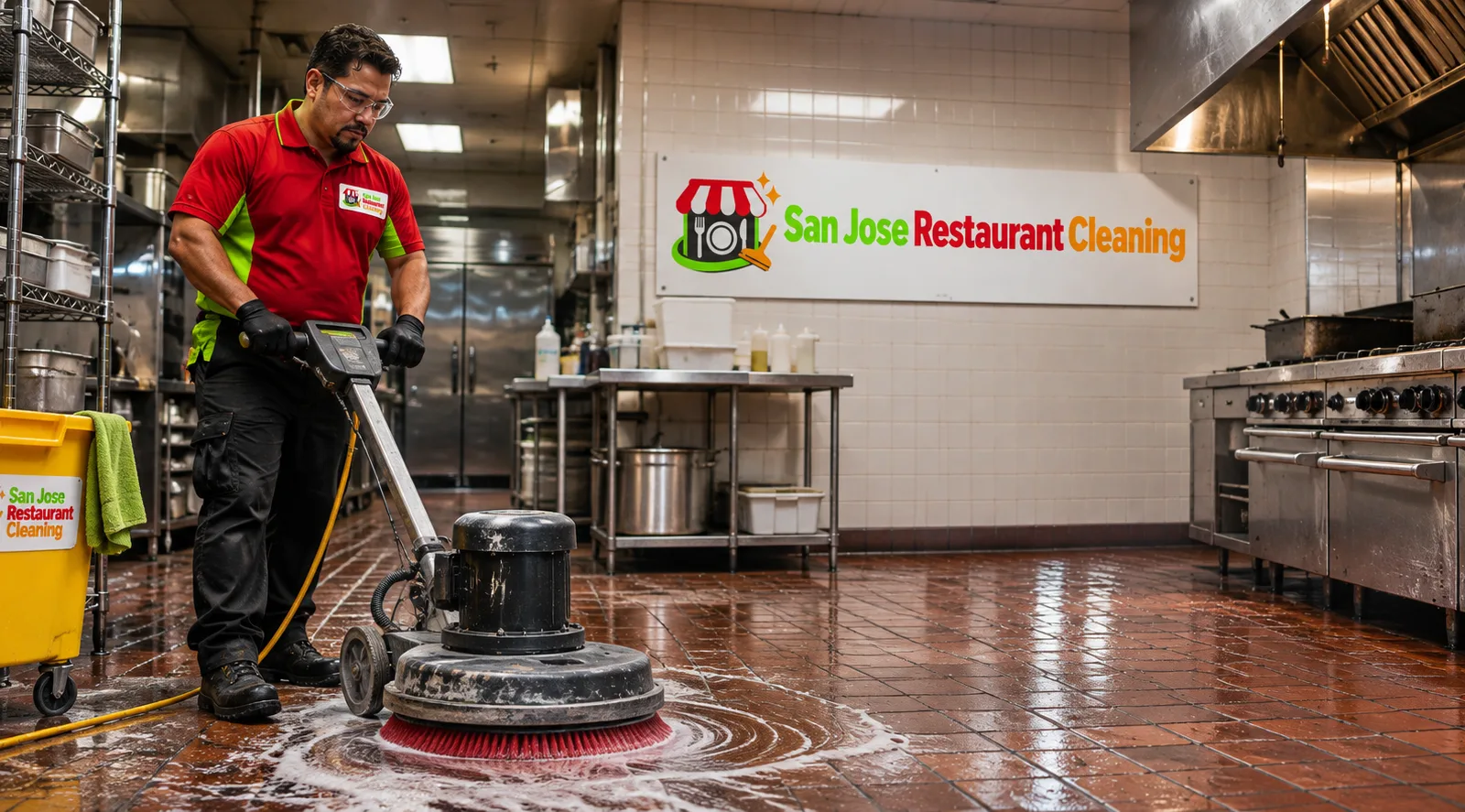
Remove built-up grease, food residue, and embedded grout soil with a cleaning plan scheduled around your restaurant's operating hours.
Commercial Kitchen Floor Cleaning targets the greasy film and compacted soil that routine sweeping and mopping can leave on tile, grout, edges, and hard-to-reach areas. Cooking oil can spread through foot traffic, collect beneath movable equipment, and hold fine debris in porous grout lines. As layers build, floors become harder to maintain and may feel slick even after a normal closing clean.
San Jose Restaurant Cleaning uses a site-specific approach based on the floor material, soil load, kitchen layout, drainage, and access. We are San Jose's trusted restaurant team, planning the work around food preparation areas and operating schedules and providing a defined scope before cleaning starts. Our location on South 22nd Street also gives us practical access to restaurants in central and eastern San Jose.
A professional deep clean supports daily sanitation work rather than replacing it. Staff should continue sweeping, spot cleaning, and mopping according to the restaurant's procedures. Periodic service removes residue that has resisted that routine, making the floor easier to inspect and maintain.
Restaurant kitchens commonly use quarry tile or other durable ceramic tile because these materials tolerate heavy traffic and frequent cleaning. The grout is often the harder part. Cementitious grout is porous, so grease and dark soil can settle below the surface. Epoxy grout is less absorbent, but it can still develop a film if cleaner residue and cooking oil are repeatedly spread across it.
Effective restaurant tile cleaning starts by identifying the surface and testing the chemistry in a small area. The cleaning solution needs enough dwell time to loosen oily residue without drying on the floor. Mechanical agitation then works the solution into textured tile, grout joints, corners, and toe-kick areas. Controlled recovery removes the suspended soil instead of pushing it toward another part of the kitchen.
We pay close attention to floor sinks, thresholds, wall edges, transitions, and paths between cooking lines and warewashing areas. Water is managed carefully near appliances, electrical connections, damaged grout, and floor penetrations. A deep clean cannot repair loose tile, failed grout, poor drainage, or worn slip-resistant texture, so those conditions are identified rather than concealed.
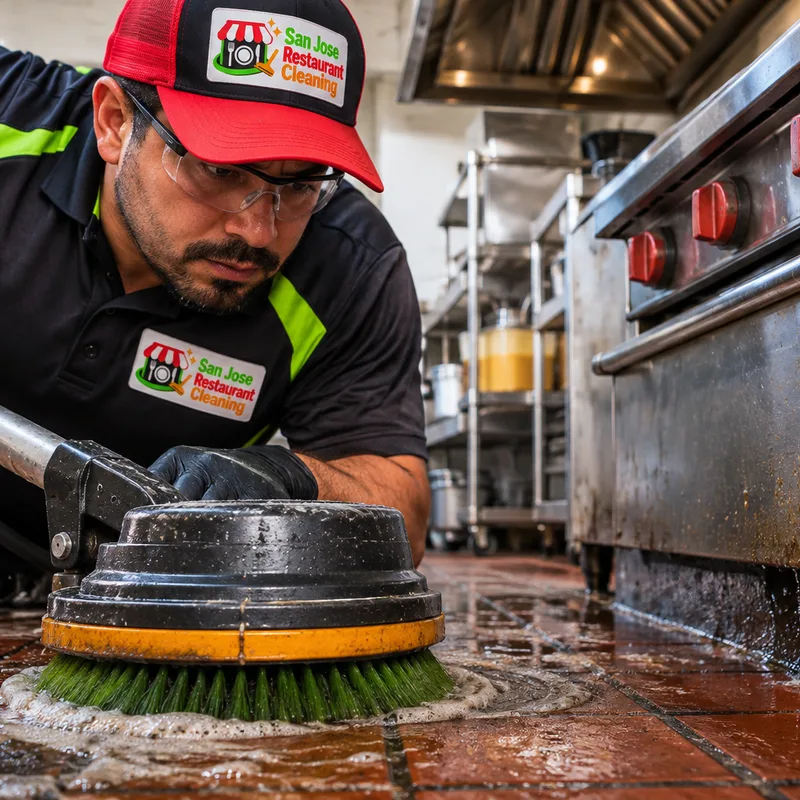
Restaurant floor degreasing breaks up oily residue near fryers, ranges, prep equipment, and the traffic paths that carry grease away from the line.
Restaurant grout cleaning uses suitable chemistry, dwell time, and agitation to release embedded soil from sound grout. Permanent staining and damaged grout may remain visible.
Detailed cleaning addresses wall edges, corners, toe kicks, table legs, and accessible equipment perimeters that broad mops or floor machines often miss.
Soil around dish and pot-washing areas may contain food debris, detergent film, and grease. The method is adjusted for the floor condition and available drainage.
When included in the scope, compatible tile in server alleys, beverage stations, restrooms, and dining areas can be cleaned during the same scheduled visit.
A maintenance schedule can be set according to cooking volume, floor texture, operating hours, and how quickly grease returns after deep cleaning.
We review the floor material, grout condition, grease accumulation, drains, equipment clearance, water-sensitive areas, and access. The scope identifies which spaces and movable items are included.
Loose debris is removed, approved movable items are relocated, and vulnerable surfaces are protected as needed. Cleaning is coordinated so it does not conflict with active food preparation.
A surface-compatible cleaning solution is applied in controlled areas. Proper dilution and dwell time help soften bonded grease and soil before agitation.
Commercial equipment and detail tools work the solution across textured tile and into grout joints, corners, thresholds, and other accessible buildup points.
Liquefied grease, cleaning solution, and soil are recovered. The floor is rinsed as appropriate so loosened residue is removed rather than redistributed.
We inspect the cleaned area, note damage or staining that remains, and leave the floor to dry before normal kitchen traffic resumes. Staff receive practical guidance for ongoing maintenance.
San Jose restaurants range from compact kitchens near San Pedro Square to busy dining operations around Santana Row and neighborhood businesses in Willow Glen. The relevant difference is not the district name. It is the working environment. A small kitchen may have tight equipment spacing and little room to stage tools, while a larger operation may require phased cleaning so walkways and production areas remain controlled.
Restaurants near downtown entertainment areas may need service after a late closing, while lunch-focused businesses in North San Jose may have a different access window between shifts or after weekday service. In Japantown, older commercial spaces can also have narrow back-of-house layouts that require more hand detailing and smaller equipment. These conditions are confirmed during scheduling rather than assumed.
For commercial floor cleaning in San Jose, access matters as much as square footage. Loading rules, parking distance, stairs, locked service entries, equipment that cannot be moved, and the location of approved water and drainage points can change the plan. We agree on an arrival window, included areas, and expected drying time so managers can coordinate staff and reopening.
Commercial kitchen floor cleaning in San Jose typically costs about $400 to $1,500 per visit, while small, accessible kitchens may cost less and large or heavily soiled facilities may cost more. Pricing depends on cleanable square footage, grease severity, tile and grout condition, equipment clearance, floor drains, water access, parking, after-hours scheduling, and the amount of hand detailing required. Recurring service may be priced differently from a one-time restorative clean. The exact cost is confirmed after a site inspection and written scope.
A little preparation helps the cleaning window stay focused on the floor. Managers should identify which equipment may be moved, remove exposed food and single-use items from the work area, secure low storage, and tell the crew about damaged tiles, loose grout, sensitive equipment, or drainage concerns. Staff should also know when the floor will be unavailable and when normal traffic can resume.
Grease interception and wastewater handling need separate attention. The City of San Jose Environmental Services Department administers requirements affecting food-service wastewater and fats, oils, and grease. Floor-cleaning wastewater should never be directed to an exterior storm drain. The approved recovery and disposal approach depends on the property and restaurant setup, so water and drainage points are confirmed before work starts.
After service, daily care has a direct effect on how long the floor stays manageable. Use the correct dilution for the restaurant's floor cleaner, provide enough dwell time, change dirty mop water, clean tools after use, and address spills promptly. Overusing detergent can leave a residue that attracts soil. Recurring blackening in grout, standing water, or grease returning unusually quickly may point to a maintenance, drainage, ventilation, or equipment issue that cleaning alone cannot correct.
Get a clear floor-cleaning scope built around your kitchen layout, soil level, access, and operating schedule.
Call for a Free QuoteReview timing, equipment access, floor condition, recurring frequency, scheduling and quote factors before requesting service.
A small kitchen may be completed within a few hours, while a larger or heavily soiled operation can require most of an overnight service window. The timeline depends on square footage, grease buildup, grout condition, equipment access, detailing needs, and drying conditions. San Jose restaurants with tight service entrances or limited staging space may need extra setup time.
Yes, accessible floor around fixed or immovable equipment can usually be cleaned with compact machines and hand tools. The crew will not disconnect gas, electrical, plumbing, or refrigeration connections. If heavy equipment needs to be moved by a qualified vendor, that should happen before the scheduled cleaning window.
No, cleaning can remove greasy residue that contributes to a slick surface, but it cannot make a floor slip-proof or restore worn texture. Slip conditions also depend on footwear, spills, floor slope, drainage, tile profile, and damaged surfaces. Loose tile, failed grout, standing water, and worn flooring should be evaluated separately.
Restaurant grout cleaning can substantially improve grout darkened by removable grease and soil, but it cannot guarantee the original color. Deep staining, chemical damage, cracked joints, missing grout, and permanently discolored repairs may remain. A test area can help set realistic expectations before the full cleaning.
The right interval is based on grease production and floor condition rather than a fixed calendar. High-volume frying, textured tile, porous grout, long operating hours, and crowded cooking lines usually create faster buildup. The interval can be adjusted after the first visit by observing how quickly residue returns between regular staff cleanings.
Yes, after-hours scheduling is often possible when arranged in advance. The service window must allow time for preparation, cleaning, soil recovery, rinsing, inspection, and drying before employees return. Restaurants near San Pedro Square or other late-night dining areas should account for closing duties and staff departure when setting access.
The quote is driven by cleanable area, soil severity, floor material, grout condition, access, movable equipment, drainage, and the requested schedule. Parking distance, stairs, security procedures, and limited loading access can also affect labor. A site inspection produces a more reliable scope than pricing based only on dining-room capacity.
Tell San Jose Restaurant Cleaning about the floor material, kitchen size, grease buildup, access, and preferred service window. We will outline the work and set practical expectations before the cleaning begins.