
Commercial kitchen cleaning
Degreasing of accessible floors, washable wall areas, baseboards, mats, splash zones, and equipment exteriors based on the approved scope. Heavy buildup or difficult access is identified before work starts.
Serving San Jose, California & surrounding areas
Open 24/7
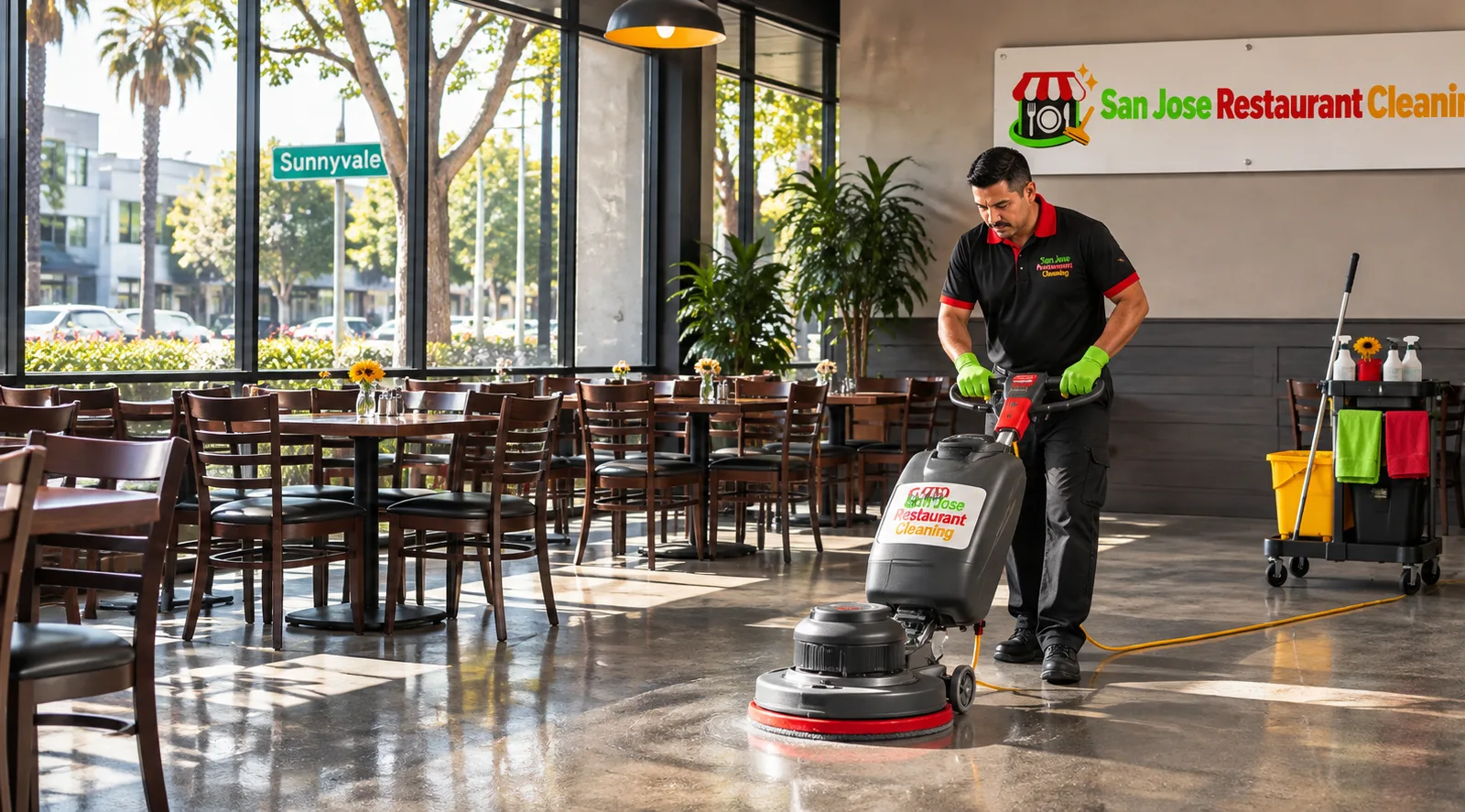
Reliable recurring and deep cleaning for commercial kitchens, dining rooms, restrooms, and guest-facing areas, scheduled around your operating hours.
Restaurant Cleaning Sunnyvale should support daily operations without getting in the way of staff, deliveries, or guests. San Jose Restaurant Cleaning provides planned cleaning for independent restaurants, cafés, quick-service locations, bars, and multi-unit operators. We build the scope around the rooms, surfaces, equipment exteriors, and service schedule at each location.
Our team works from 370 S 22nd St in San Jose and serves restaurants in nearby Sunnyvale. We are an experienced restaurant team in San Jose, CA that understands commercial cleaning must fit the realities of opening, closing, and shift changes. Work can be arranged for off-hours or another agreed service window, with attention given to access instructions, alarm procedures, and areas that must be ready first.
A useful proposal identifies what will be cleaned, how often it will be done, and which tasks require periodic attention. That written scope helps managers distinguish daily janitorial duties from detail work such as degreasing edges, cleaning beneath movable equipment, or scrubbing restroom floors.
Restaurant cleaning starts with a clear separation between food-preparation areas and guest-facing spaces. In the kitchen, typical work may include degreasing accessible floors, walls, splash zones, baseboards, and equipment exteriors. Crews can clean under movable items when access is safe and included in the scope. Food-contact surfaces require products and procedures appropriate to the surface, followed by any required rinse or sanitizing step stated on the product label.
Dining-room service commonly covers tables and chair exteriors, floors, baseboards, ledges, doors, glass, and visible touchpoints. Restrooms need their own cloths, tools, and cleaning sequence to reduce cross-contamination. Entry areas also deserve close attention because tracked soil and marks on glass are among the first conditions guests notice.
These zones should not share dirty mop water or used cloths. Color-coded microfiber, dedicated restroom tools, measured chemical dilution, and clean-to-dirty work patterns give crews a repeatable method. Material compatibility matters as well. Quarry tile, stainless steel, sealed concrete, wood finishes, and natural stone do not all tolerate the same cleaner or scrub pad.
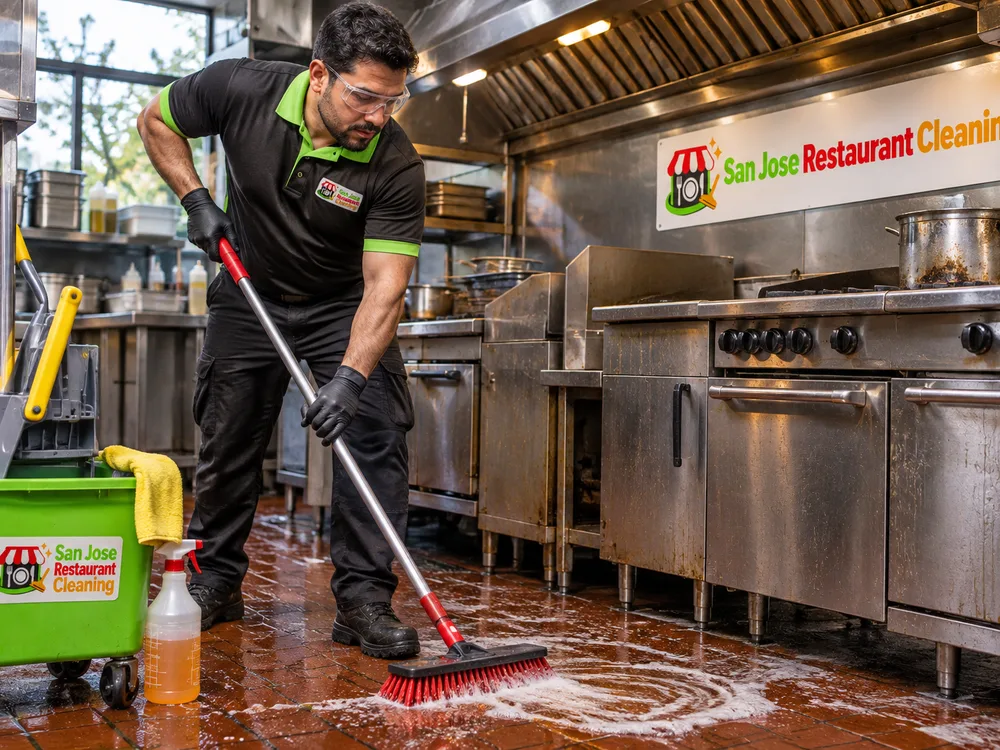
Degreasing of accessible floors, washable wall areas, baseboards, mats, splash zones, and equipment exteriors based on the approved scope. Heavy buildup or difficult access is identified before work starts.
Cleaning for floors, table and chair exteriors, booths, ledges, doors, glass, and other guest-visible surfaces. Service can be sequenced so the room is ready for the next opening.
Restroom fixtures, partitions, mirrors, dispensers, floors, and common touchpoints receive a defined cleaning and disinfection routine using dedicated tools.
Detail work can address corners, grout lines, floor edges, buildup beneath movable items, high dust, and other tasks that do not fit a routine closing checklist.
Cleaning can extend to dry-storage floors, employee areas, waste staging zones, and service corridors when these spaces are included and cleared for safe access.
Schedules may be set by night, week, or another operating cycle. A task list documents frequencies so managers know what is due during each visit.
We review the kitchen, dining room, restrooms, entrances, storage areas, and access conditions. The walkthrough also identifies sensitive finishes, fixed equipment, grease buildup, floor drains, and spaces that staff must clear.
Routine work and periodic detail cleaning are separated in writing. The plan records included areas, service frequency, preferred time window, and any items that require restaurant staff or a specialist to handle.
Before the first visit, both parties confirm entry instructions, water and electrical access, chemical restrictions, waste procedures, and how personal items or exposed food will be secured. Clear preparation reduces delays.
Crews normally work from cleaner zones toward dirtier zones, keep restroom tools separate, and follow product labels for dilution, dwell time, rinsing, and surface compatibility. Wet floors are marked while work is underway.
Managers can report a missed detail or changing operational need. The scope can then be corrected or updated, which is especially useful when menus, layouts, opening hours, or traffic patterns change.
Sunnyvale restaurants operate in several distinct commercial settings. Downtown Sunnyvale around Murphy Avenue has dining businesses near pedestrian activity and evening service, so entry glass, dining floors, and narrow service windows may need close coordination. Along El Camino Real, many restaurants depend on visible storefronts and frequent customer turnover, which puts emphasis on entrances, restrooms, and dependable opening readiness.
Restaurants near Moffett Park often work around weekday office demand and building access rules. Locations near Lawrence Expressway may have shared commercial parking and delivery activity, making key control and after-hours entry part of the plan. These operating differences affect timing and access more than the cleaning method itself.
Regional dry periods can also increase dust carried through entrances, while rainy weather brings tracked moisture and grit. Mat cleaning and entry-floor care can be adjusted as conditions change. The restaurant's manager still determines the final schedule, including quiet hours, delivery conflicts, and areas that must remain available to closing staff.
Cleaning removes soil and food residue. Sanitizing reduces microorganisms on a cleaned surface when the correct product, concentration, contact time, and procedure are used. Disinfecting is a separate process governed by the product label. These terms should not be treated as interchangeable when a restaurant cleaning scope is written.
Crews should follow the Safety Data Sheet and label directions for each chemical. Products should never be mixed unless the manufacturer specifically directs it. Chemical containers need clear labels, and incompatible products must be stored apart. Staff should also respect lockout and safety requirements around powered equipment; cleaners should not reach into, dismantle, or move equipment that has not been made safe.
Routine restaurant cleaning does not automatically include exhaust-hood and duct cleaning, pest treatment, grease-trap pumping, hazardous-material removal, equipment repair, or work inside energized appliances. Those tasks require separate scopes and, in some cases, specialty providers. A written plan prevents assumptions and lets the restaurant coordinate required work with its own food-safety procedures and any guidance from the Santa Clara County Department of Environmental Health.
San Jose Restaurant Cleaning can document the areas and frequencies included in recurring service. The restaurant remains responsible for its food-safety plan, employee practices, equipment operation, and regulatory compliance.
A walkthrough can turn a general cleaning request into a written schedule with clear areas, frequencies, access requirements, and priorities for opening readiness.
Call for a Free QuoteReview pricing, access, preparation, equipment scope, recurring service, and inspection expectations before requesting a quote.
Restaurant cleaning is usually priced after a walkthrough because floor area, kitchen condition, service frequency, access, and task depth all affect labor. A small dining room with routine floor and restroom service has a different scope than a full commercial kitchen requiring heavy degreasing. Overnight access, buildup, high surfaces, grout work, and moving approved equipment can also change the price. San Jose Restaurant Cleaning provides a location-specific proposal after the included areas and schedule are confirmed.
Yes, off-hours service can be arranged when crew access and a workable cleaning window are available. Restaurants around Downtown Sunnyvale may have late dining activity, while locations near office areas such as Moffett Park may prefer work after weekday service. The plan should state entry instructions, alarm procedures, lock-up responsibilities, and the time by which floors and restrooms must be ready.
A restaurant deep cleaning may take one shift or require staged visits, depending on the size, buildup, access, and number of tasks. Heavy floor degreasing, grout agitation, detail work beneath movable equipment, and high dusting take longer than routine service. A walkthrough identifies staffing needs and whether any area must be cleaned separately to avoid disrupting preparation or deliveries.
Cleaning can include accessible exterior surfaces of commercial kitchen equipment when those surfaces are safe, cool, and listed in the scope. Interior appliance cleaning, dismantling, electrical components, exhaust ducts, and repairs are separate tasks. Restaurant staff should shut down and secure equipment according to manufacturer instructions before cleaners work around it.
Yes, a recurring plan can combine routine visits with periodic detail tasks. Floors, restrooms, entrances, and dining areas may need frequent attention, while edges, high dust, grout lines, and hard-to-reach spaces can follow a rotating schedule. Frequencies are set according to operating hours, traffic, cooking methods, and the restaurant's own closing duties.
Staff should secure food, remove personal items, clear approved work surfaces, and make sure scheduled equipment is cool and safely shut down. The restaurant should also provide agreed access and identify spills, damaged flooring, loose electrical cords, or other hazards. If equipment must be moved, the responsible party and safe method should be decided during the walkthrough.
No cleaning company can guarantee an inspection result because compliance also depends on food handling, temperature control, employee hygiene, pest prevention, equipment condition, and management procedures. Professional cleaning can support the restaurant's sanitation program by completing defined tasks consistently. Santa Clara County Department of Environmental Health requirements and the restaurant's approved procedures remain the controlling standards.
Tell San Jose Restaurant Cleaning about your operating hours, priority areas, and current cleaning concerns. We will discuss a practical service window and prepare a scope that matches the way your restaurant operates.